Riyadh, Saudi Arabia – Saudi Arabia has agreed to open a strategic western air base to the United States, expanding Washington’s military footprint as the US-Israeli war on Iran enters its fourth week, according a Middle East Eye (MEE) report.
After high-level talks between Elbridge Colby, a senior official in the US Department of War, and Saudi Defence Minister Prince Khalid bin Salman, Riyadh granted US forces expanded access and overflight permissions.
The agreement centres on King Fahd Air Base in Taif, officials told the Middle East Eye (MEE) news outlet.
Strategic shift
The move marks a major geographical shift driven by military necessity. Located in western Saudi Arabia, Taif lies far beyond the reach of Iranian Shahed drones and ballistic missiles compared with Prince Sultan Air Base near Riyadh.
The base near Riyadh, intended to protect the Arab monarchies, has come under repeated Iranian attacks since the conflict erupted on February 28.
Taif’s proximity to Jeddah on the Red Sea also makes it a critical logistics hub. With Iran effectively controlling the Strait of Hormuz — the vital maritime chokepoint for global energy exports — Jeddah is emerging as a lifeline for sustaining US armed forces.
Thousands of American ground troops are currently en route to the region from East Asia, current and former US officials told MEE.
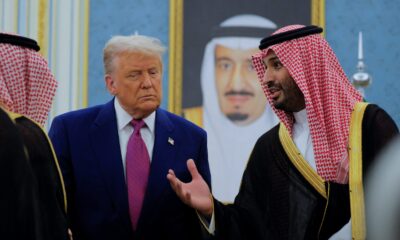
“The attitude in Riyadh has shifted towards supporting the US war as a way to punish Iran for strikes,” a Western official in the Gulf said, noting that US President Donald Trump and Saudi Crown Prince Mohammed bin Salman have held regular calls over the past three weeks.
Regional toll
When the US joined Israel in launching an attack on Iran, Saudi Arabia, the United Arab Emirates, and Qatar lobbied Washington heavily against the offensive.
They insisted that their sovereign territories, which host major US military installations, should not be used as launchpads.
Despite that initial reluctance, Gulf states have paid a heavy price as the Islamic Republic retaliates. The UAE alone has intercepted 338 ballistic missiles and 1,740 drones since the start of the war.
Qatar, despite its role as a neutral mediator, suffered a crippling blow when Iran fired missiles at its Ras Laffan refinery in response to an Israeli attack on Iran’s South Pars gas field.
Qatari Energy Minister Saad al-Kaabi estimated that repairs will take three to five years, severely affecting 17 percent of the nation’s gas production.
The immense economic and infrastructural toll is reshaping Gulf perspectives, but approaches vary.
Hardening stance
The UAE reportedly told US Secretary of State Marco Rubio that it is ready for a nine-month war and is not urging Washington to end the conflict quickly.
By contrast, Oman has carved out a niche as a mediator and fiercely condemned the conflict. Foreign Minister Badr al-Busaidi wrote in The Economist this week that this is “not America’s war” and that Washington was dragged into a conflict with little to gain.
Saudi Arabia has adopted a notably harder line. After Iranian attacks on Riyadh and the western port of Yanbu, Saudi Foreign Minister Prince Faisal bin Farhan condemned Iran’s “heinous attacks”.
He warned that the kingdom reserved the right to take direct military action, a statement one former US intelligence official described to MEE as “fighting words.”
“Saudi Arabia and the UAE were neutral before this war,” Bernard Haykel, a professor of Near Eastern studies at Princeton University, said.
“But as they have been attacked, they have come to the realisation that they cannot live with this hardline Iranian regime next door.”
Hormuz test
The Gulf’s calculus is heavily complicated by broader regional outrage over Israel’s ongoing war in Gaza, which has killed over 72,000 Palestinians since October 2023.
Crown Prince Mohammed bin Salman has publicly accused Israel of committing genocide, making any overt military alignment with the US-Israeli coalition highly sensitive domestically.
Further angering Gulf capitals, Israeli Prime Minister Benjamin Netanyahu recently suggested that Arab monarchs should bypass the closed Strait of Hormuz by building pipelines through the desert to Israel — effectively giving Israel veto power over their energy exports.
“We can’t lose sight of Israel’s role. They want to bring the Gulf into this war,” Bader al-Saif, an expert at Kuwait University, said. “And let’s be clear, there is no clear exit strategy from the US.”
At the same time, confidence in Washington’s security umbrella is fraying. The US has struggled to replenish the Gulf states’ Patriot and Terminal High Altitude Area Defence (THAAD) interceptors.
For now, analysts say Saudi Arabia is trying to “thread the needle” between establishing deterrence and avoiding full-scale war entanglement.
A key test may come in the Strait of Hormuz. Experts suggest that the UAE and Saudi Arabia could eventually join a US-led operation to wrest control of the waterway back from Tehran, after Washington’s NATO and Asian allies rebuffed requests to take part.
Anwar Gargash, a diplomatic adviser to the Emirati president, told the US Council on Foreign Relations this week that the UAE could join such an operation.
“Ending the war is generally the preferred option,” said Abdulaziz Alghashian, a Saudi security expert.
But with Iran proving it can wreak havoc on global energy markets, he added: “Not only do we really need to create deterrence, but we also need to create a precedent for post-war.”